
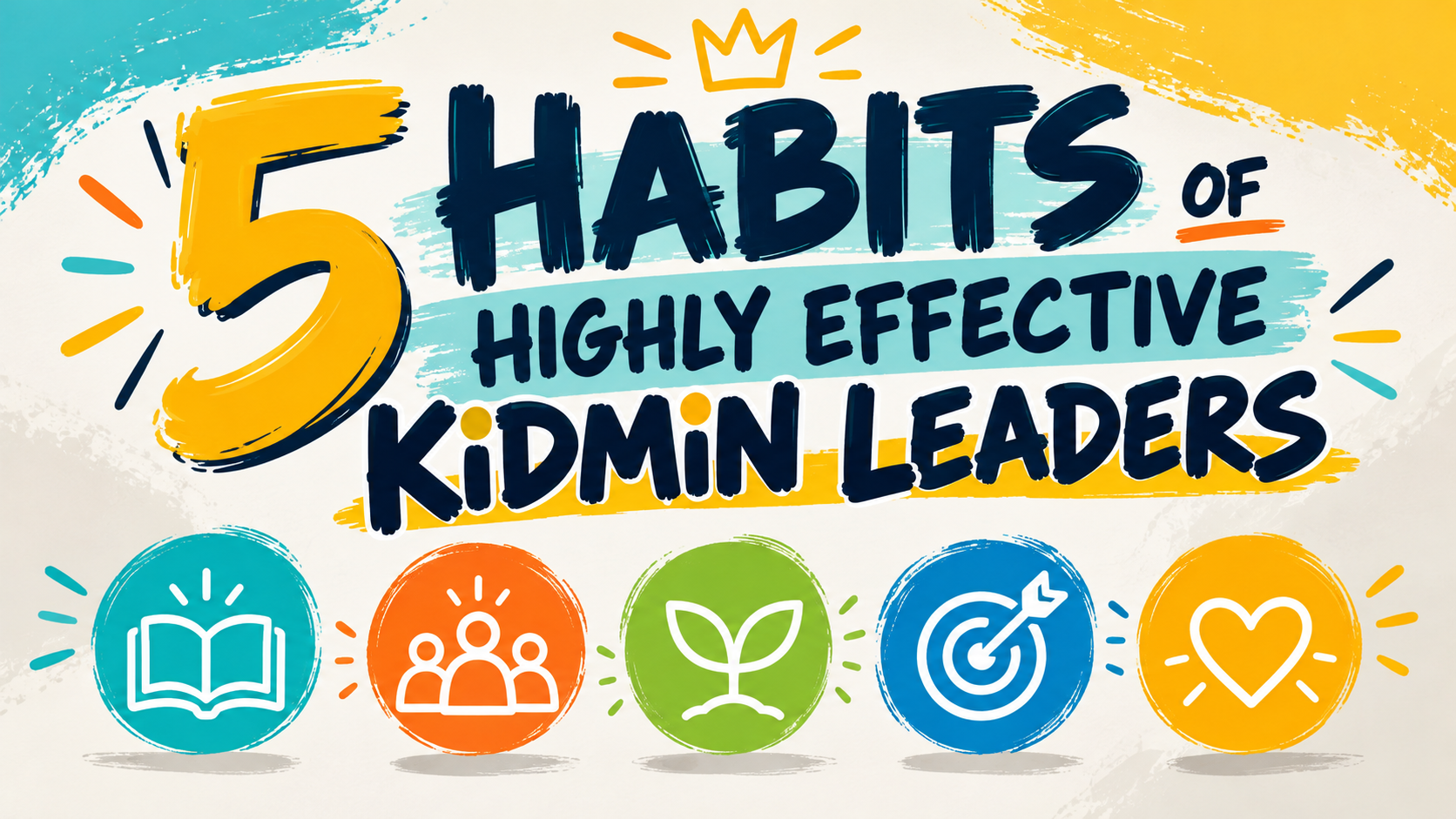
5 Habits of Highly Effective KidMin Leaders
Great kids' ministry doesn't happen by accident. After years of coaching ministry leaders across the country, these five habits consistently separate thriving KidMin programs from struggling ones.
Great kids' ministry doesn't happen by accident. After years of coaching ministry leaders across the country, I've seen what separates thriving KidMin programs from ones that are just surviving. It comes down to habits — the daily and weekly rhythms that shape how you lead, plan, and pour into your team.
Here are five habits I coach every KidMin leader to build.
1. Start With Prayer, Not Planning
It sounds obvious, but most leaders jump straight into logistics — volunteer schedules, curriculum choices, room setups. The most effective KidMin leaders I know begin their week in prayer specifically for the children they serve. Not generic prayer, but intentional intercession: calling kids by name, asking God for wisdom about that one distracted fourth-grader, or the family going through a divorce.
When prayer leads, planning follows with purpose.
2. Invest in Your Volunteers Before You Need Them
The biggest mistake in kids' ministry is treating volunteers like a resource to be deployed rather than people to be developed. Highly effective leaders build relationships with their team between Sundays — a quick text of encouragement, a coffee meeting, a handwritten note.
Volunteers who feel seen and valued don't burn out. They become your most powerful ministry multipliers.
3. Know Your Numbers — and What They Mean
Attendance, volunteer ratios, first-time visitor follow-up rates — these aren't just administrative details. They're a window into the health of your ministry. Effective leaders review their numbers weekly, not to stress over them, but to ask: What is God showing me here?
A drop in attendance might signal a connection problem. A low volunteer ratio might mean kids aren't getting the personal attention they need. Numbers tell stories — learn to read them.
4. Create a Culture of Feedback
The best KidMin leaders I've coached actively invite honest feedback from their team, parents, and even the kids themselves. They ask questions like:
- What's working that we should do more of?
- What's frustrating you that we haven't addressed?
- If you could change one thing, what would it be?
Feedback isn't criticism — it's fuel. Leaders who create safe spaces for honest conversation build ministries that keep getting better.
5. Protect Your Own Spiritual Tank
You cannot pour from an empty cup. Effective KidMin leaders are ruthless about protecting their own spiritual health — regular time in the Word, Sabbath rest, and relationships outside of ministry where they're not the leader but simply a friend or a learner.
Burnout is the enemy of longevity. The leaders who are still going strong after 10, 20, 30 years in kids' ministry are the ones who learned early that their own soul needs tending.
Ready to Go Deeper?
These five habits are just the beginning. If you want a full game plan for building a thriving KidMin program — from volunteer development to curriculum strategy to parent engagement — check out The KidMin Playbook. It's the coaching resource I wish I'd had when I started.
And if you want to work through these habits with a community of KidMin leaders in real time, join us at The KidMin Presser — live on Zoom every Sunday at 7PM EST.
Explore Topics
Written by
Roger Stuart
Content creator and writer sharing insights and stories.